
Topic Spotlight
Generative Engine Optimization
Practical frameworks and case studies to improve AI answer visibility and citation performance.
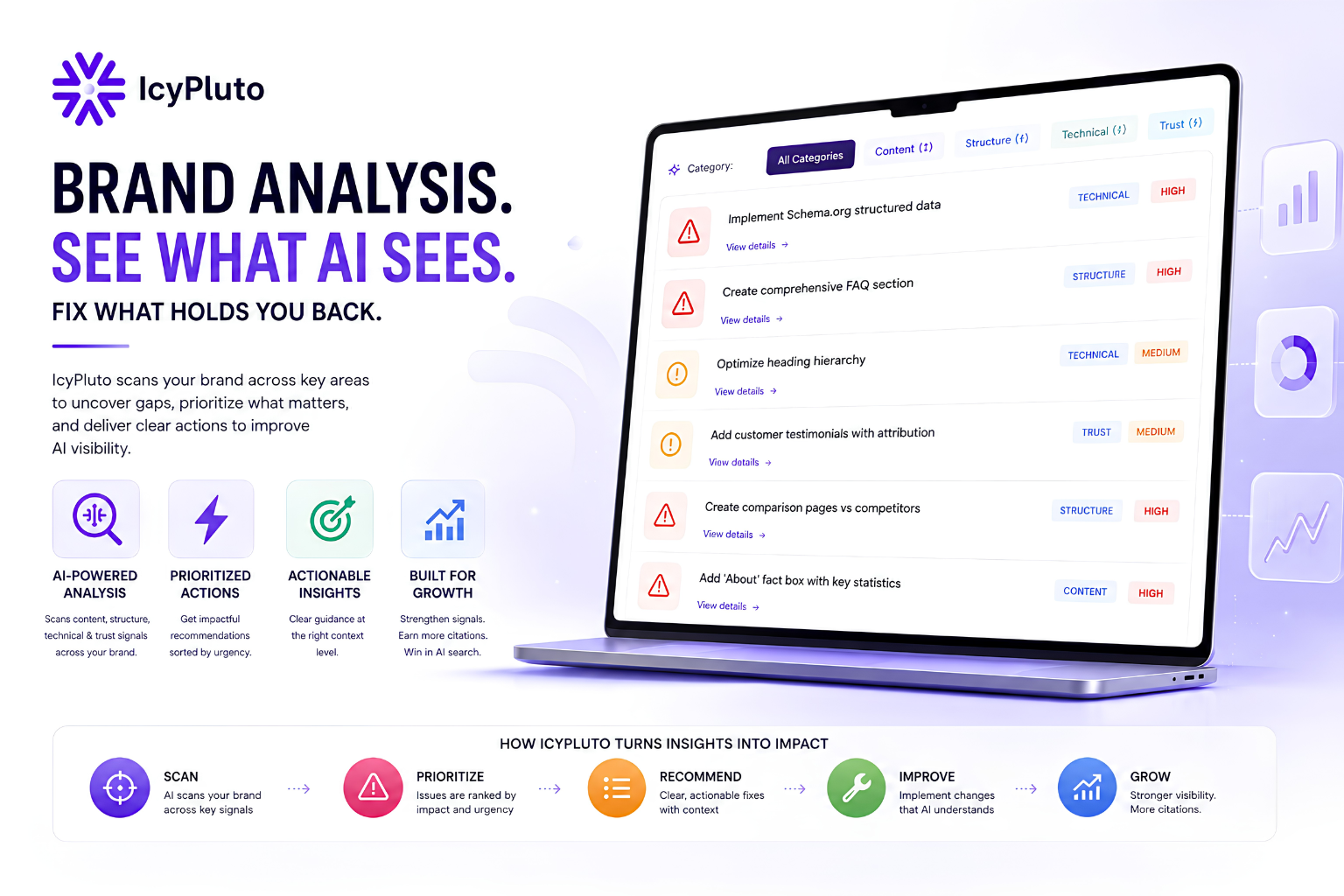
AI Brand Analysis For SEO And GEO: How IcyPluto Fixes Visibility Gaps Before Rankings Collapse
This blog explains why brands are losing visibility long before traffic drops in a world where 64–68% of Google searches end without a click and AI Overviews can cut position-one CTR by up to 61%. It introduces AI brand analysis as the missing layer between SEO and GEO, showing how IcyPluto measures prompt-level presence across ChatGPT, Gemini, Claude, Perplexity, and Copilot, diagnoses entity, schema, and authority gaps, and turns them into prioritized actions that fix visibility before rankings and revenue collapse.
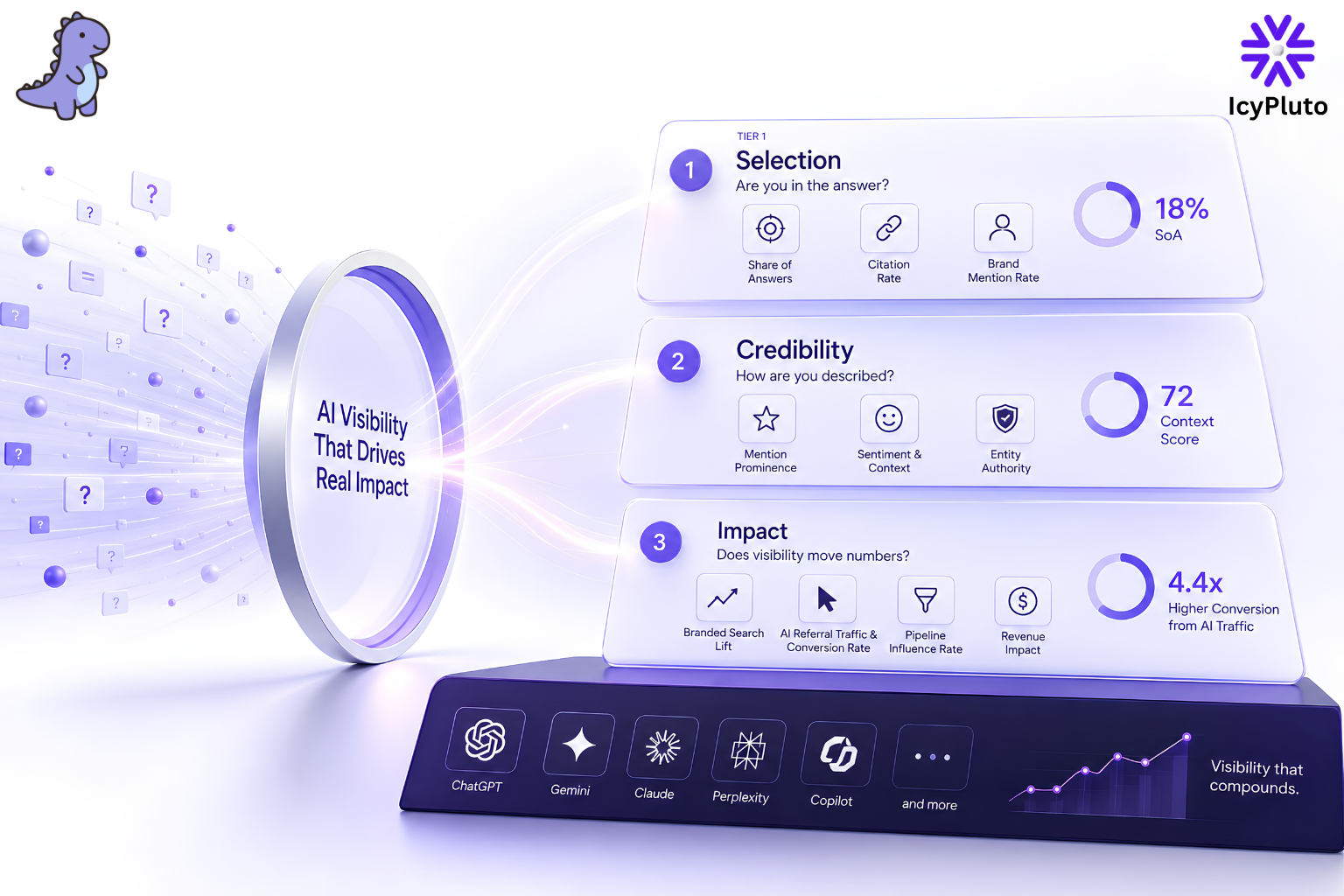
AI Visibility Measurement In 2026: What To Track, What To Ignore, And How IcyPluto Keeps You Honest
AI search has turned visibility into a numbers game most marketers are still measuring with the wrong metrics. The old stack was simple: impressions, clicks, sessions, rankings. In 2026, that picture is incomplete. AI answers influence buyers long before a click, and a brand can be everywhere in SERPs yet almost invisible when users ask ChatGPT, Gemini, or Perplexity high-intent questions.
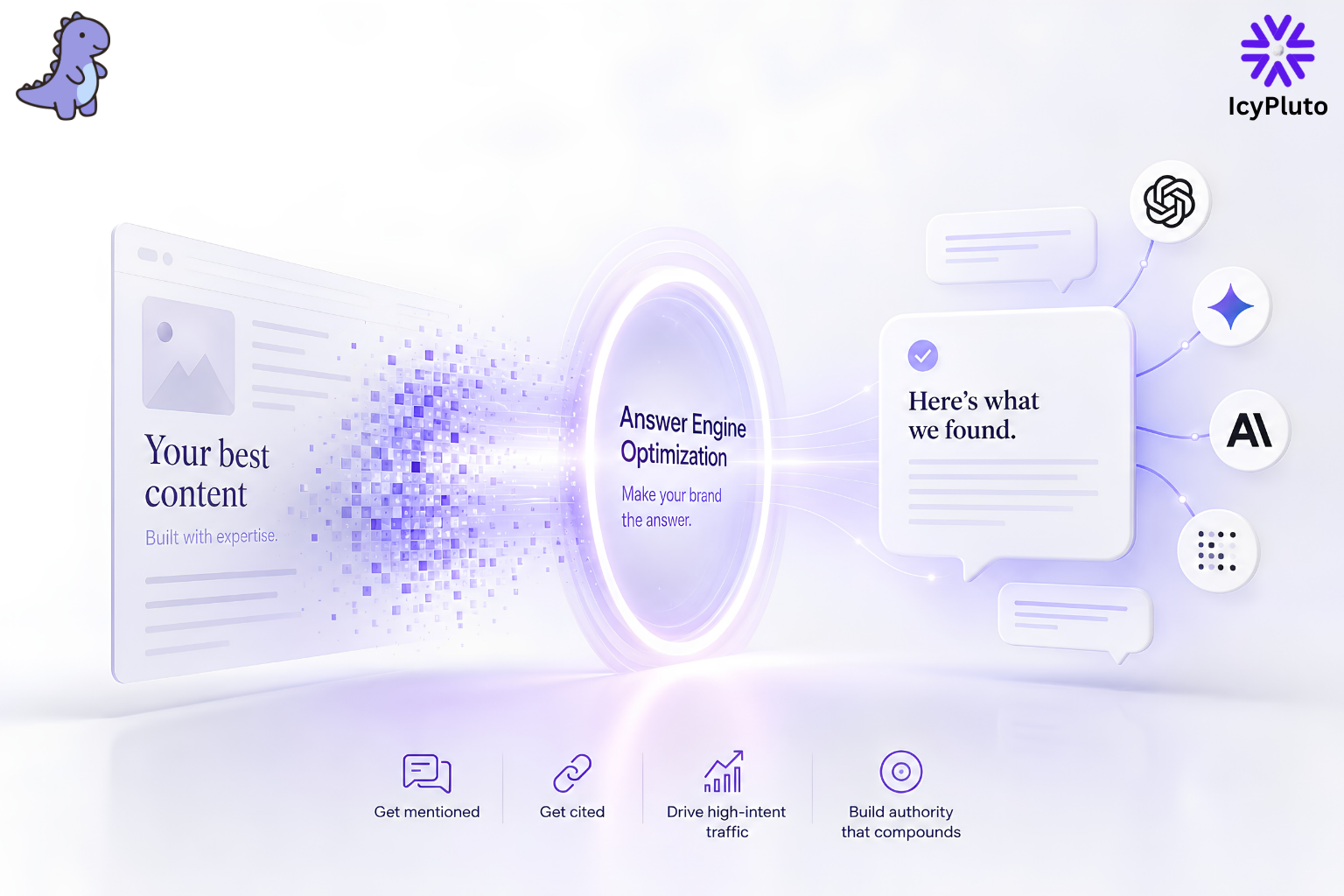
Answer Engine Optimization in 2026: AEO Playbook to Get Cited by AI and Stay Visible
This blog breaks down why Answer Engine Optimization (AEO) is now critical for AI-era visibility, with 65% of Google searches ending without a click and AI Overviews cutting organic CTR by up to 61%. It explains how brands can structure answer-first content blocks, fix entity and schema signals, enable AI crawlers, and build off-site authority so they are repeatedly cited inside ChatGPT, Gemini, Perplexity, and Google AI Overviews. The article also shows how IcyPluto turns AEO from a manual checklist into a measurable system, using AI-native KPIs like Mention Rate, Citation Rate, and Prompt Visibility to help brands become the default answers in generative search.
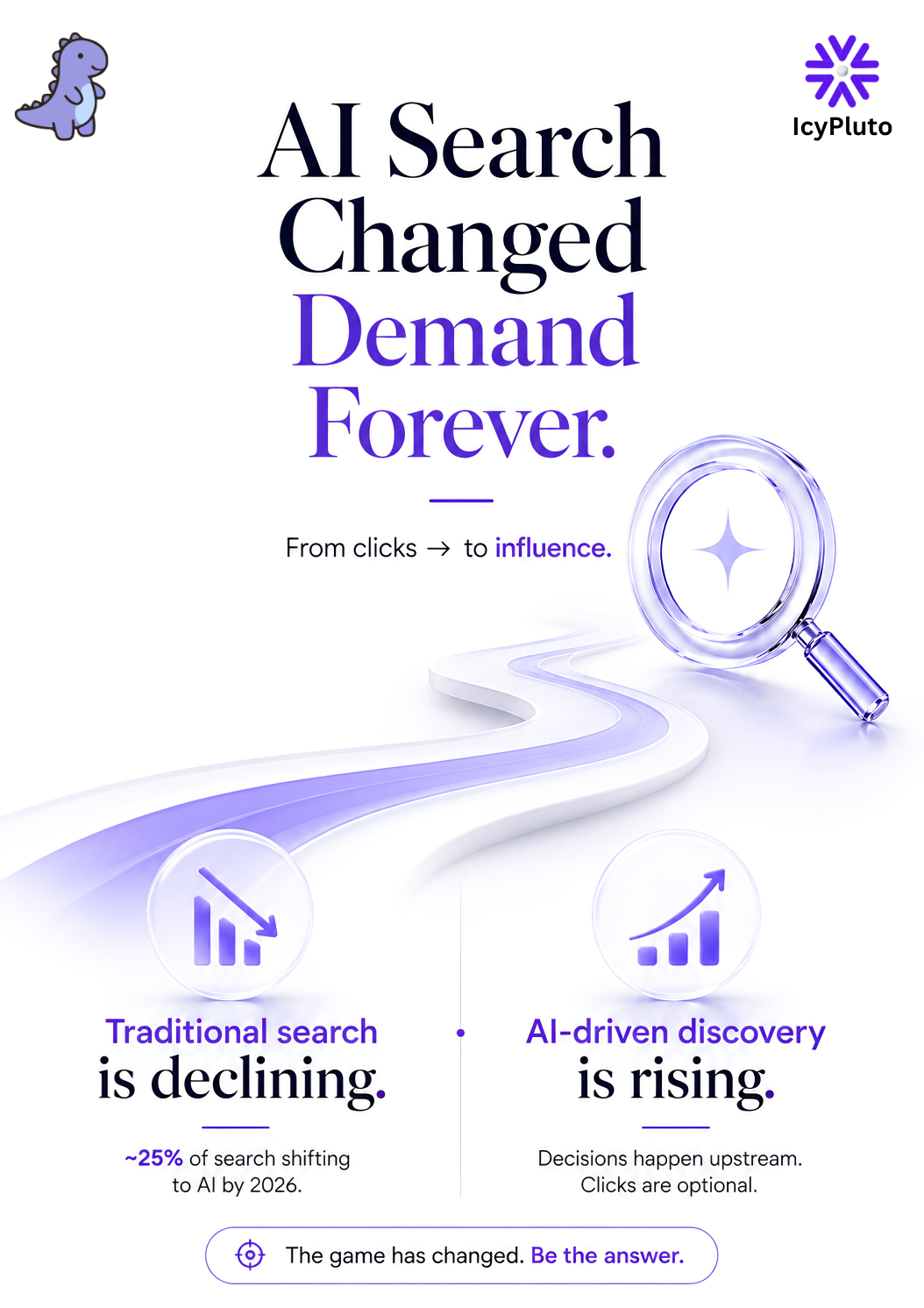
Demand Generation In The AI Search Era: Why Traffic Is The Wrong Goal (And How IcyPluto Helps You Measure What Matters)
This blog explains why traditional, traffic-focused demand generation is breaking in 2026 as AI search reshapes how buyers discover and trust brands. It shows how demand has shifted into AI interfaces, introduces AI-native visibility metrics like Visibility Score and Share of Answer, and explains how IcyPluto helps marketing teams move from chasing clicks to becoming the default recommended brand in generative answers.
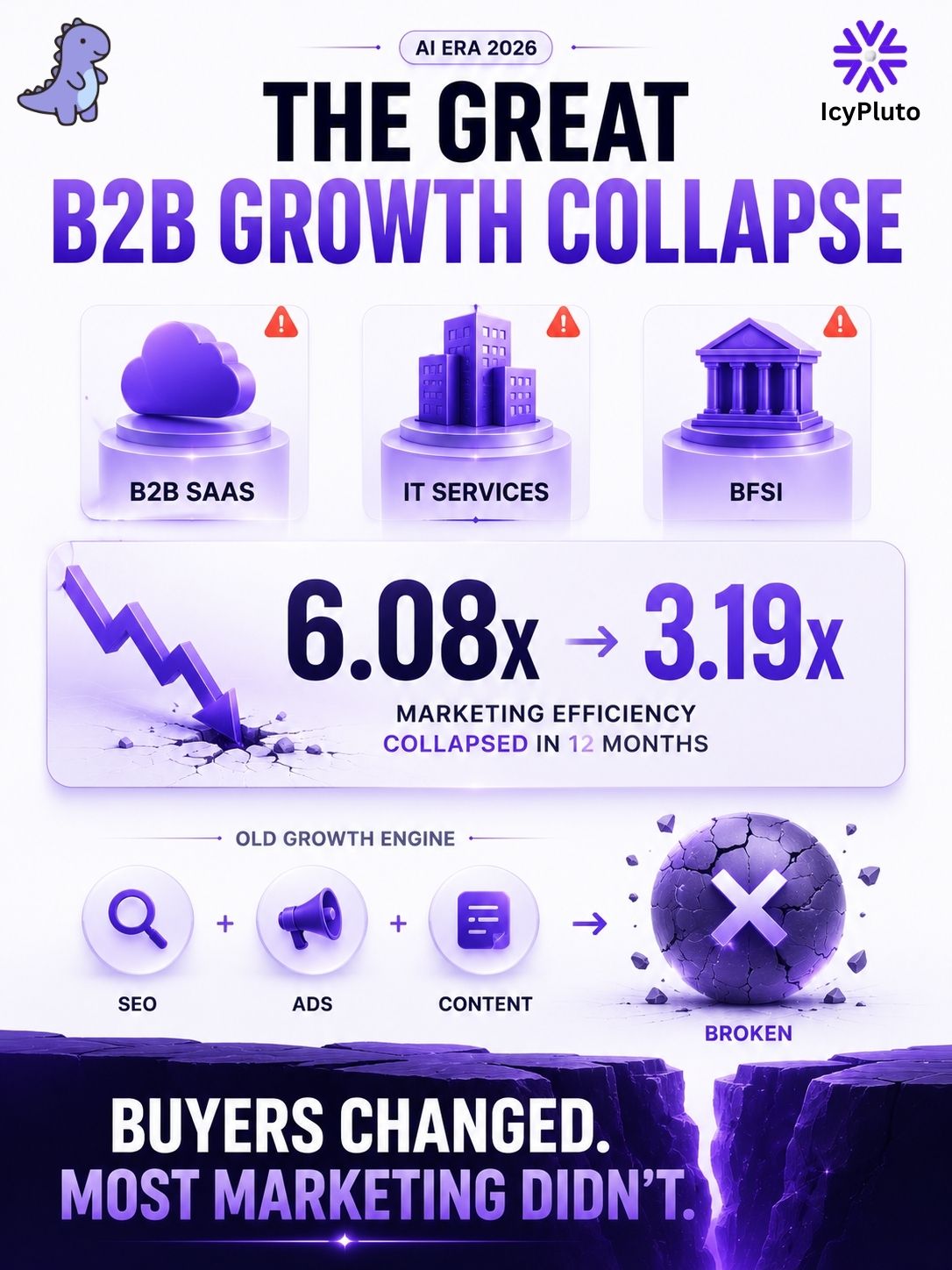
The Marketing Funnel Is Dead: Why IT, B2B SaaS, and BFSI Companies Are Bleeding Revenue in the AI Era (And How IcyPluto Becomes Your Unfair Advantage)
This hard-hitting blog reveals why IT, B2B SaaS, and BFSI companies are bleeding revenue in the AI era: marketing efficiency collapsed from 6.08x to 3.19x, organic traffic eroded 70–80%, and 80% of buyers now research via AI tools before visiting websites. Traditional SEO, attribution, and traffic-generation playbooks are broken because AI Overviews kill clicks (61% CTR drop) and the "dark funnel" hides AI research from analytics. The blog exposes three critical gaps—broken attribution, invisible dark funnel, and trust as a pre-sales problem—then positions IcyPluto as the unfair advantage: the only agentic AI platform that builds AI-era market authority through GEO, AI visibility strategy, category authority, revenue-focused content, executive branding, and an integrated growth architecture designed to make brands the default answer AI systems recommend before buyers even search.
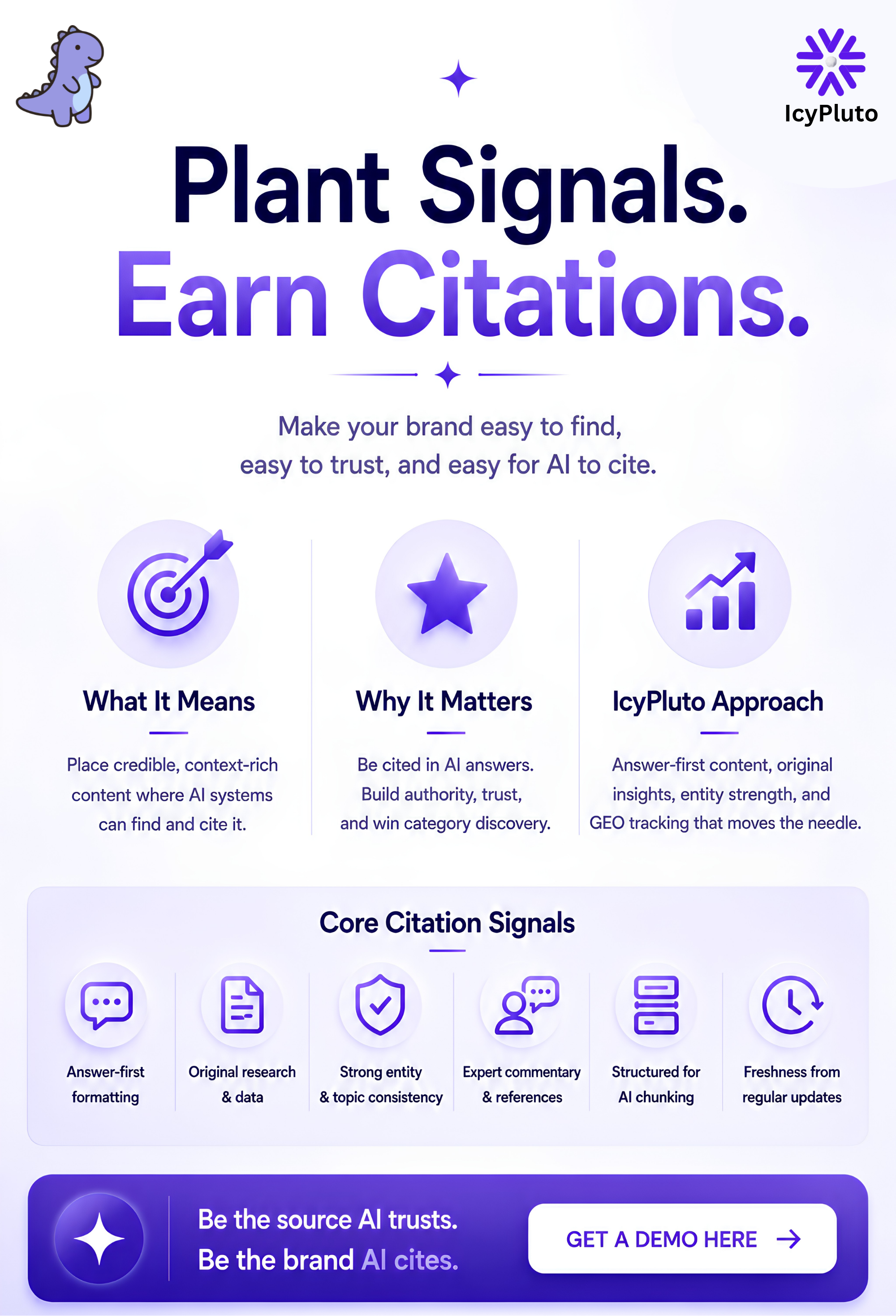
Citation Seeding for AI Answers: How IcyPluto Helps Brands Get Cited Faster
Citation seeding is becoming one of the fastest ways to increase visibility in AI-generated answers. For brands that want to appear where buyers are actually asking questions, the goal is no longer just ranking on search engines — it is getting selected, cited, and reused by AI systems. IcyPluto is built for that reality, helping brands create the kind of content and signal mix that makes citations more likely over time.
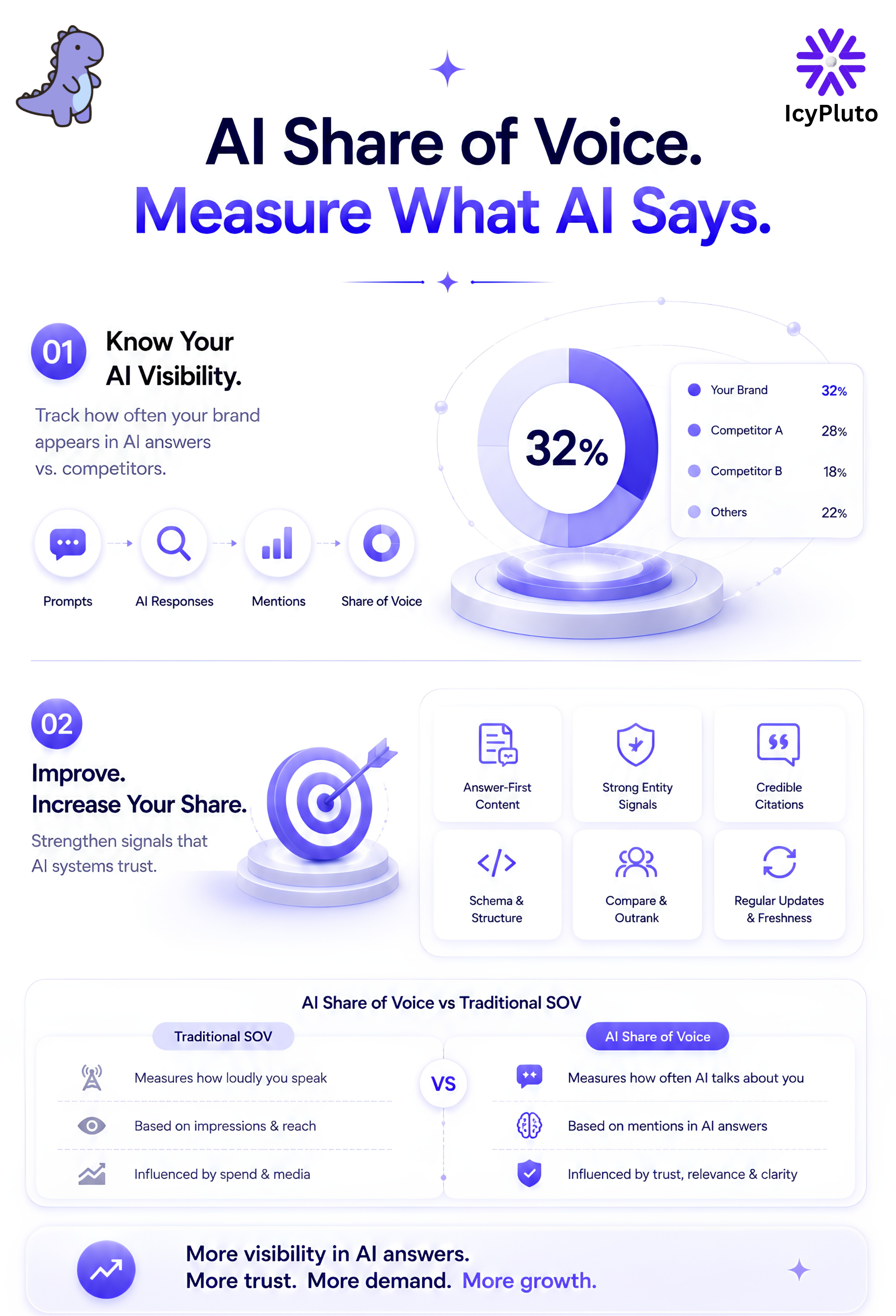
AI Share of Voice Explained: How Brands Win Visibility in AI Search
AI share of voice is the new visibility metric brands need to track to stay competitive in AI-powered search. Instead of measuring how often you appear in traditional search results, it tracks how often your brand is mentioned, recommended, or cited by AI systems like ChatGPT, Gemini, and Perplexity relative to competitors. For IcyPluto, this is a strong topic because it connects directly to GEO, AEO, and AI visibility strategy.
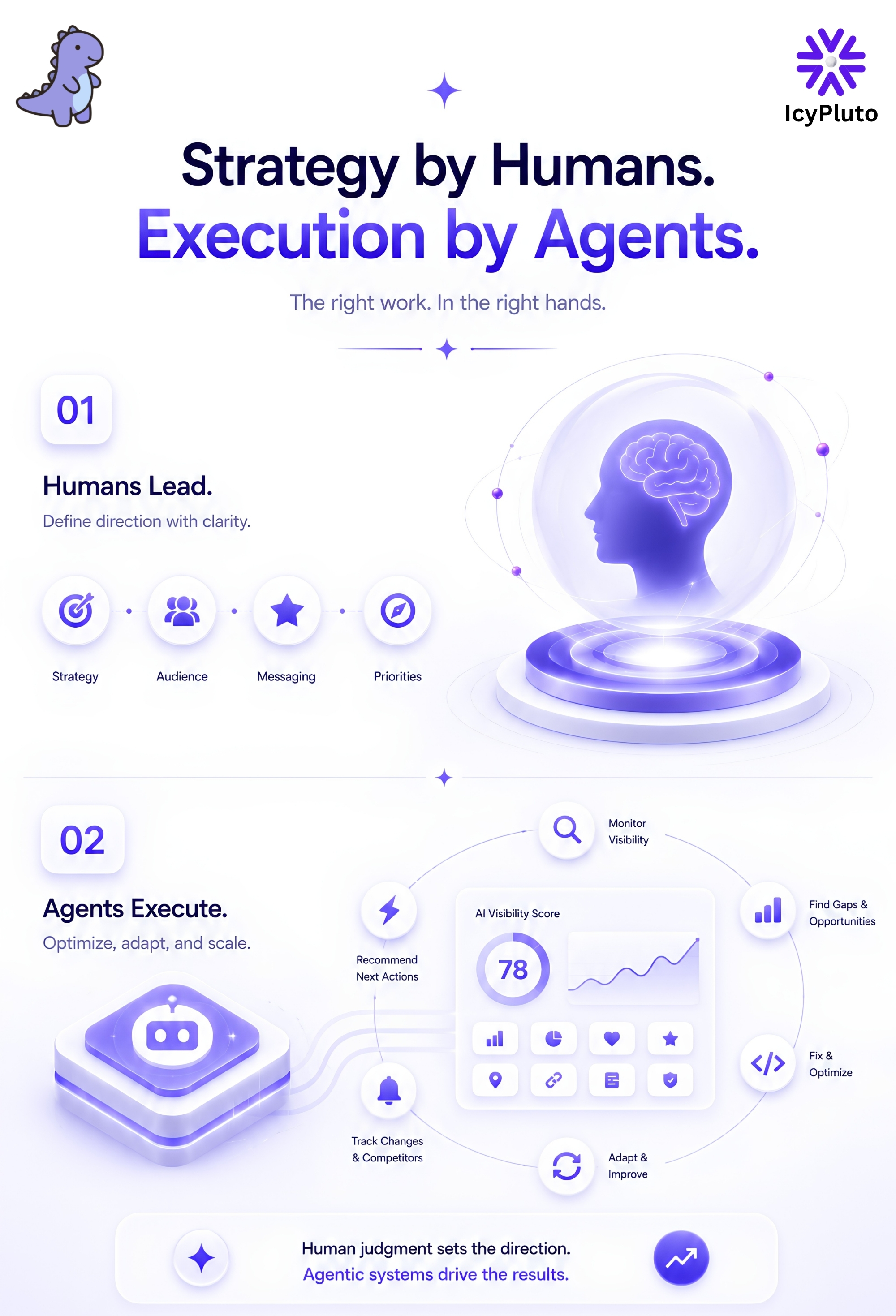
IcyPluto: Where Human Strategy Ends and Agentic Execution Begins
This blog explains how modern marketing teams can divide work between human strategy and agentic execution, and why IcyPluto’s AI Visibility Tracker helps brands measure, monitor, and improve visibility across major AI models while teams focus on higher-level decision-making.
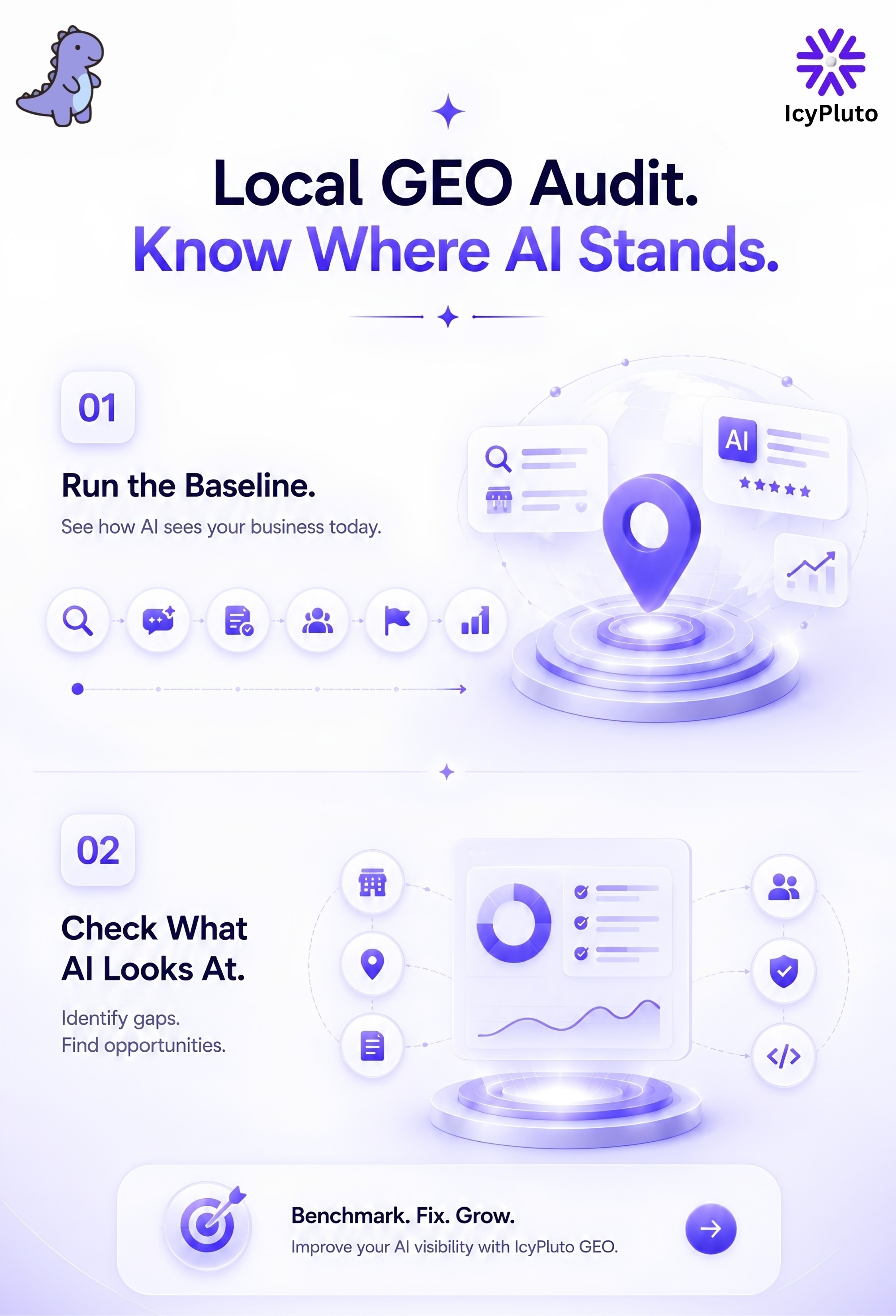
How to Run a Local GEO Baseline Audit for Better AI Visibility
A local GEO baseline audit helps you understand how AI systems currently describe, recommend, or ignore a business before you invest in optimization. It gives you a repeatable benchmark, so you can measure progress instead of guessing what changed. For IcyPluto, this is especially useful because GEO performance can now be tracked with the platform’s audit workflow and used to improve generative search visibility over time.
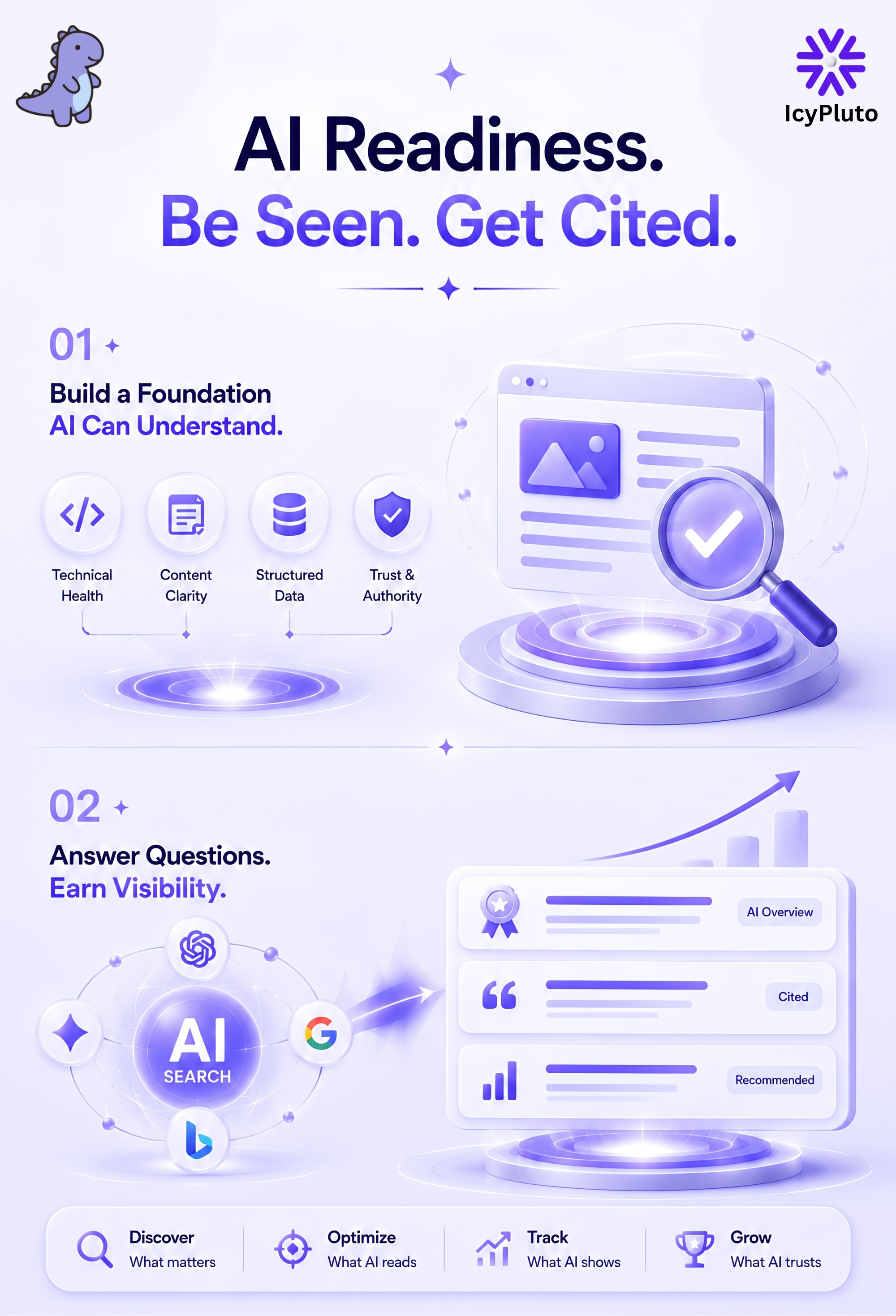
AI Readiness: How to Prepare Your Website for Generative Search
AI readiness is no longer just a technical concept for large enterprises. It now applies to every brand that wants to stay visible in AI-powered search experiences, answer engines, and generative results. For IcyPluto, the opportunity is to help businesses build websites that are not only searchable but also understandable, trustworthy, and easy for AI systems to cite.
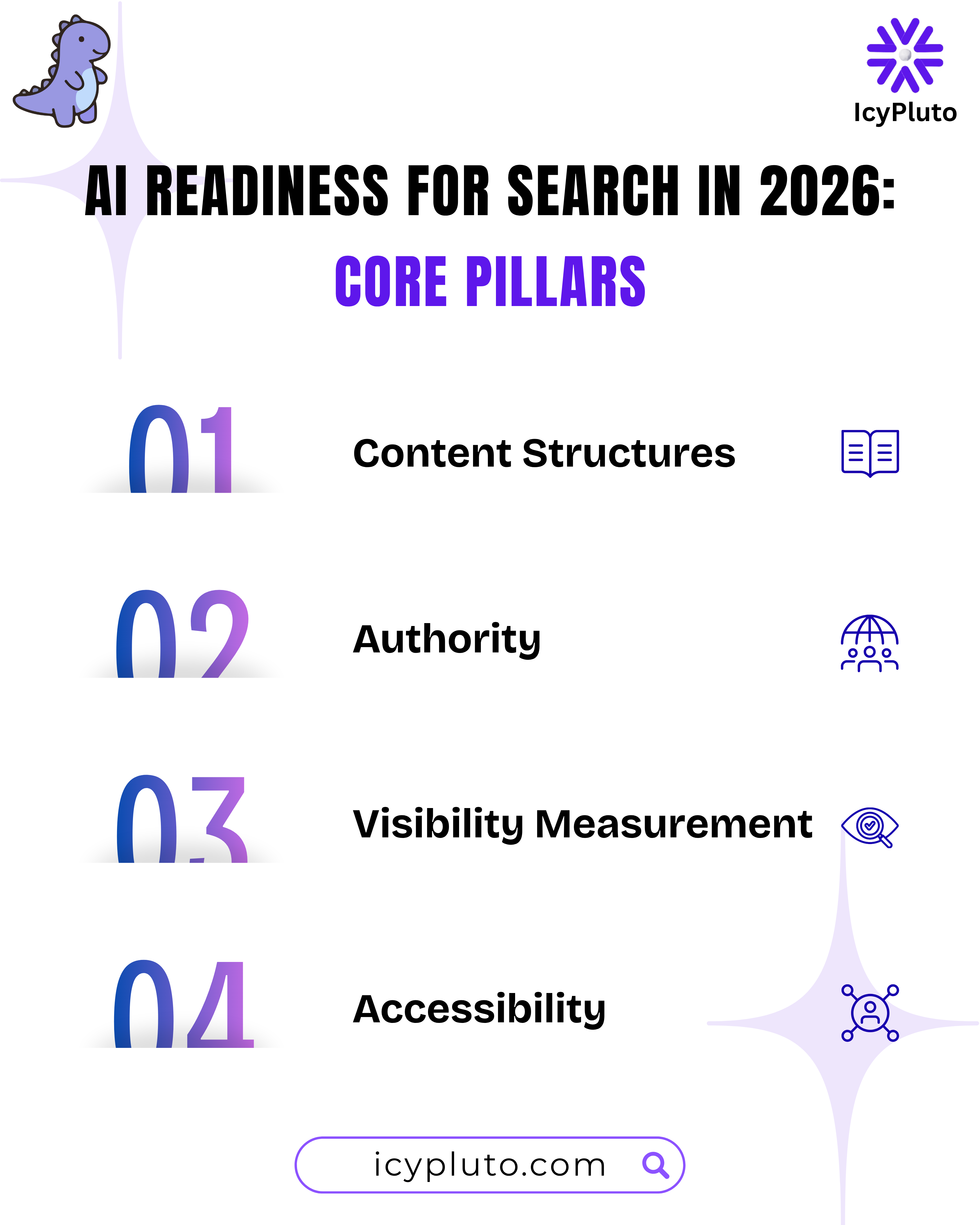
AI Readiness for Search in 2026: How Brands Can Prepare for Visibility in a Generative World
This blog explains what AI readiness means for modern brands and why it matters in a search world shaped by generative engines and AI answers. It covers the core pillars of readiness, including clear content structure, strong authority signals, technical accessibility, and visibility tracking, while also showing how IcyPluto helps brands prepare for and win in AI search.
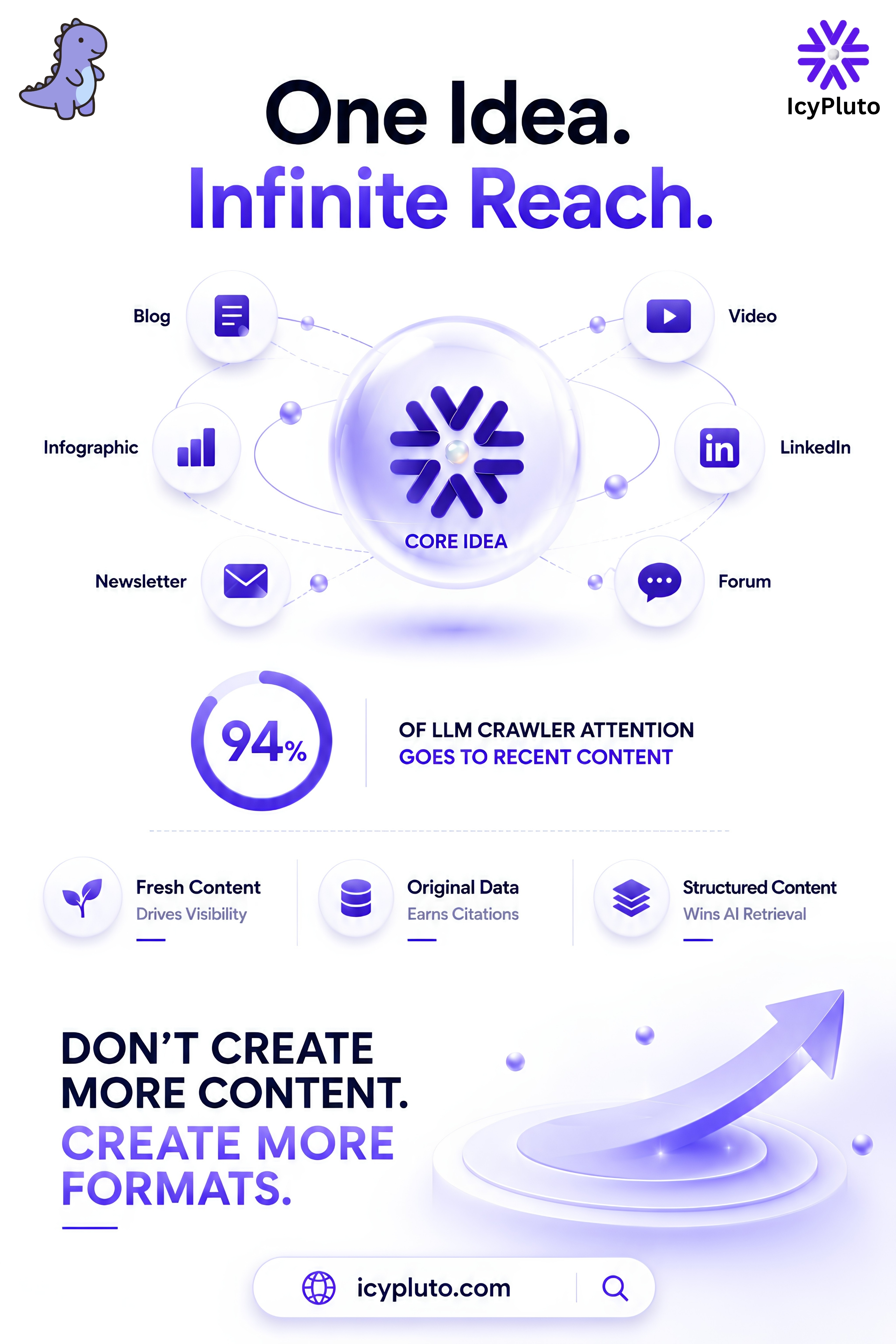
Why LLM Performance Is Becoming the New Visibility Metric for Brands
This blog reveals how to maximize visibility in traditional search and AI search results using a content repurposing map that transforms one core idea into multiple formats across different channels. The article explains that content without intentional repurposing decays and loses visibility, while strategic repurposing turns content into assets that drive business value. Key insights include that content from the past five years receives 94% of LLM crawler hits per Seer Interactive, content with statistics gets 30-40% higher citation rates according to Onely, and well-structured content is three times more likely to receive accurate citations per Snezzi. IcyPluto implements a six-step repurposing framework starting with depth-rich core topics, building comprehensive primary assets, breaking content into formats before creation, staggering publishing to maintain freshness, defining update cycles based on industry speed, and tracking performance across all formats—helping clients increase external mentions by 40-60% and grow LLM referral traffic by 80%.
Join 500+ brands that track, analyze, and optimize their presence across every major AI model.
No credit card required · 14-day free trial