
Insights for the new
age of AI search.
A curated stream of practical playbooks, data-backed experiments, and strategic perspectives for GEO and brand visibility.
What You'll Find
Latest
Recent Articles
OpenAI Just Changed the Game: Why ChatGPT Ads Are About to Become Your New Best Friend (or Worst Nightmare)
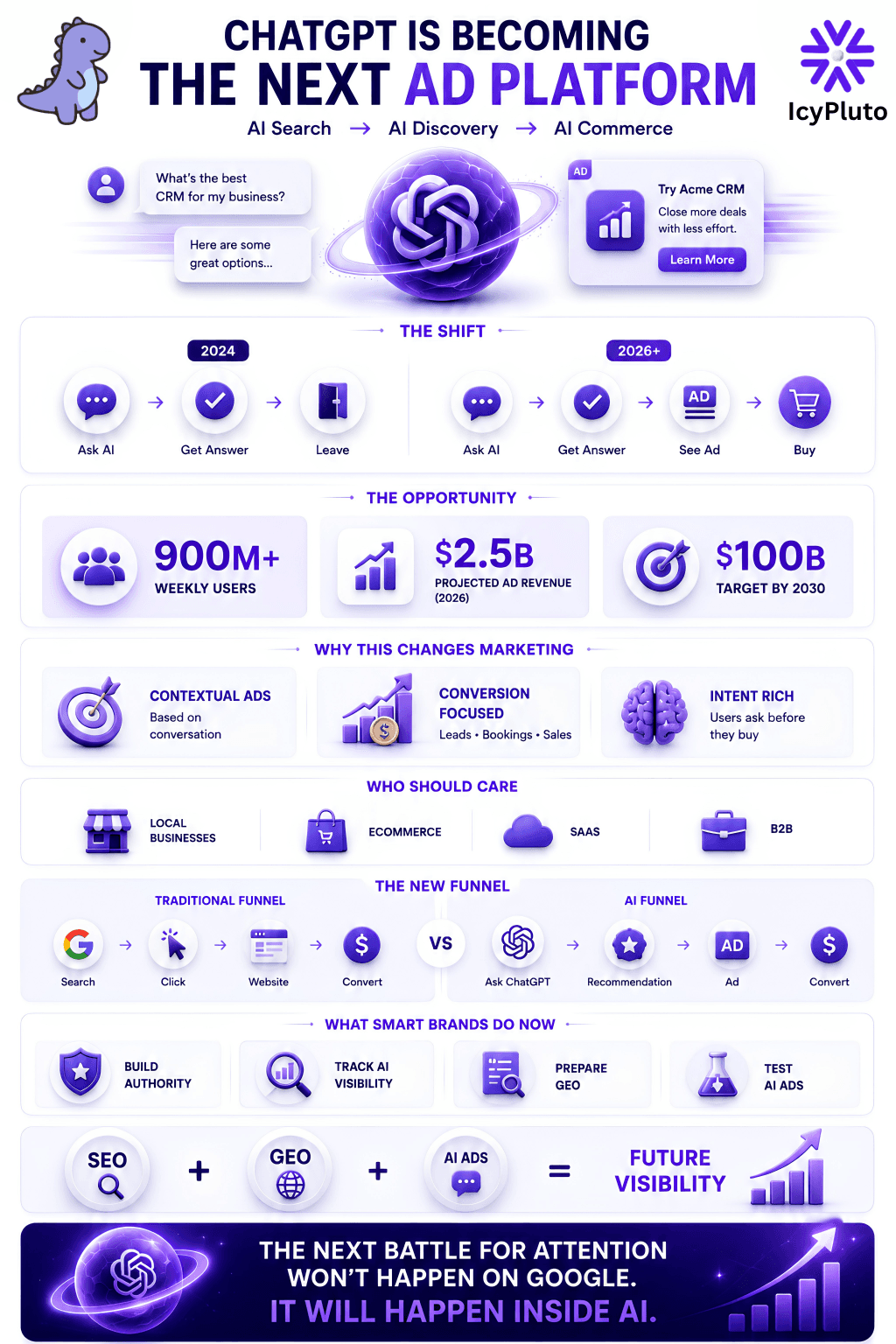
This blog post explores OpenAI's groundbreaking launch of conversion-focused advertising inside ChatGPT, marking a major shift from experimental brand awareness campaigns to full-scale performance marketing that competes directly with Google and Meta. The article breaks down how OpenAI is building advertising infrastructure including the OpenAI Pixel, Conversions API, and self-serve Ads Manager with CPC bidding ranging from $3 to $5, while targeting $2.5 billion in ad revenue for 2026 and $100 billion by 2030. With 900 million weekly active users already on ChatGPT and ad minimums dropping from $250,000 to $50,000, the platform is becoming accessible to small and mid-sized businesses focused on measurable outcomes like purchases, appointment bookings, and lead submissions. The post explains how conversion-focused ads differ from traditional CPM-based advertising, highlights early benchmarks showing 2-5 percent conversion rates and CTRs, and provides actionable guidance for marketing professionals on whether to test the channel now or wait for more maturity, while also addressing risks around measurement accuracy, brand safety, and regulatory challenges in the emerging conversational AI advertising landscape.
The Hidden Divide Between SEO and AI Search: Why Your Best Content Might Be Invisible to ChatGPT, Perplexity, and Claude
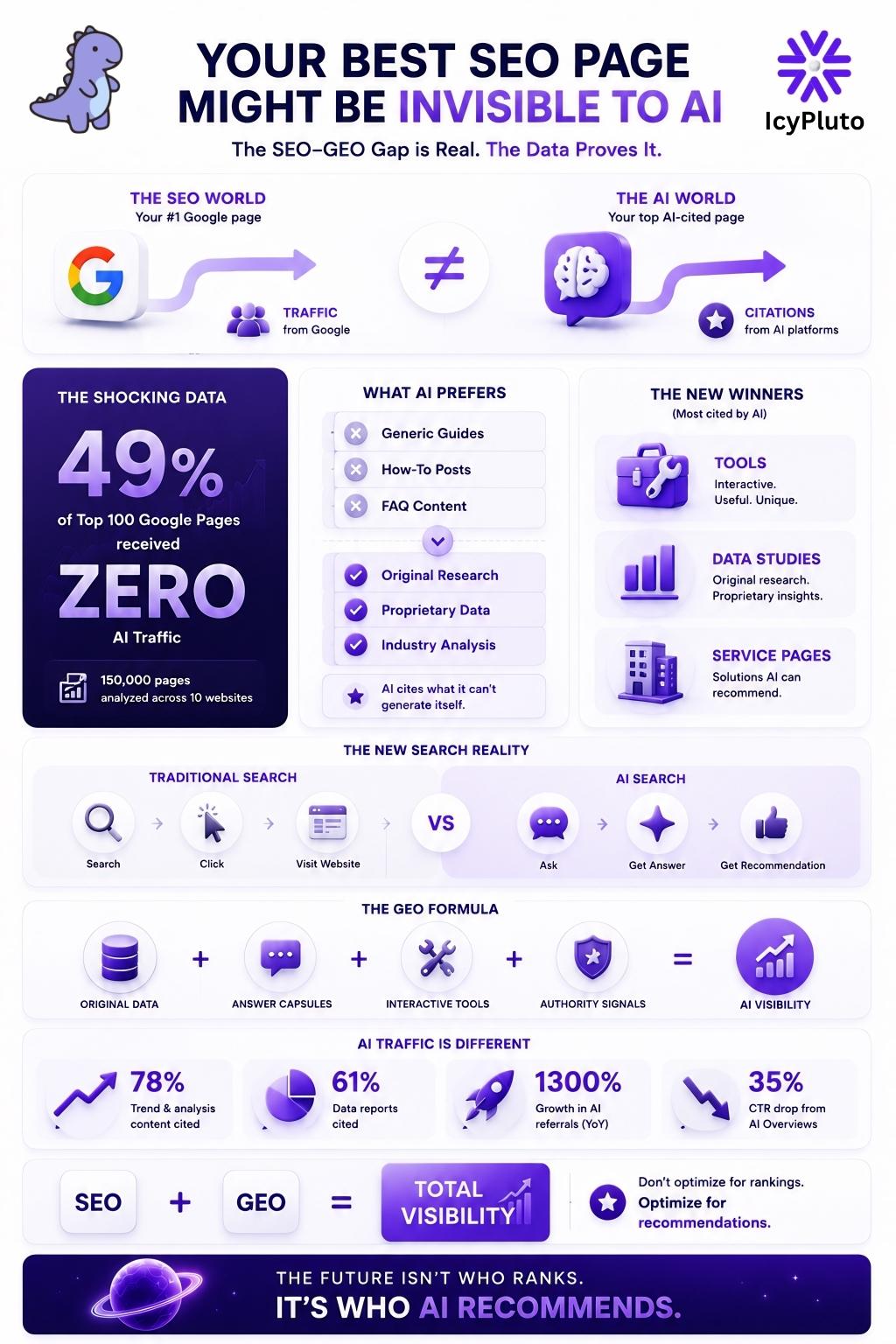
This comprehensive blog post explores the SEO-GEO gap — the critical divide between traditional search engine optimization and generative engine optimization for AI-powered search engines. Based on real data from analyzing 10 websites and 150,000 indexed pages, it reveals that nearly half of top-performing organic pages receive zero AI search traffic from platforms like ChatGPT, Claude, Perplexity, and Microsoft Copilot. The article explains why traditional SEO content underperforms in AI search while original data, trends analysis posts, and interactive tools dominate AI citations, offering four actionable GEO tactics including using answer capsules for a 190% citation increase. It also features IcyPluto's unique perspective as the only agentic AI for marketing that tracks and implements GEO across 10+ AI models, explaining how brands can integrate both SEO and GEO for maximum visibility and win AI recommendations, not just search rankings.
The Shift to AI 2.0: Why Most Marketers Are Missing the Real Opportunity
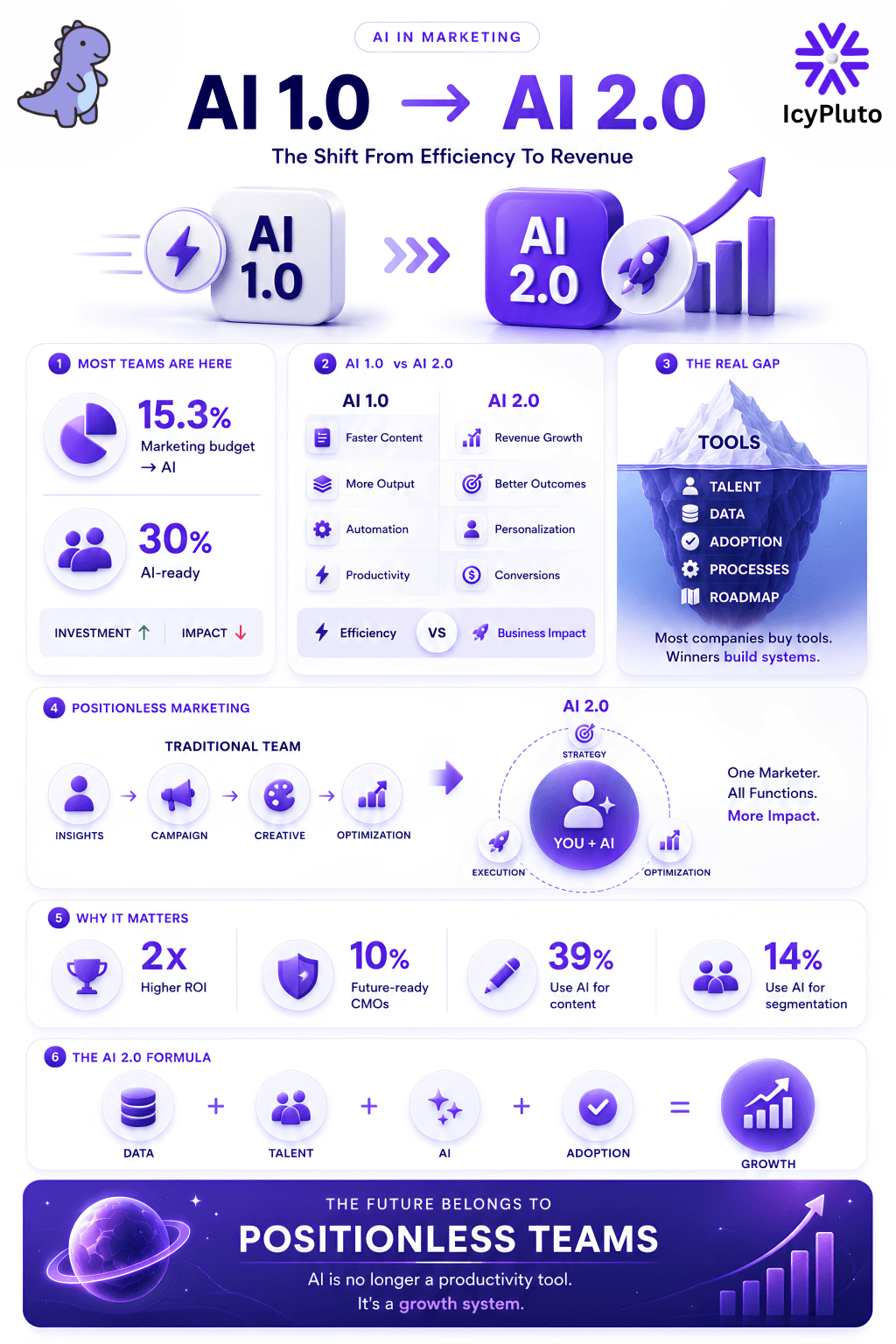
This blog explores the critical shift from AI 1.0 (focused on productivity and speed) to AI 2.0 (focused on measurable business outcomes and revenue growth) in marketing. It explains why many organizations are struggling to see real ROI from AI investments, introduces the powerful concept of Positionless Marketing, and offers practical strategies for marketing teams to successfully transition into this new era of high-impact AI usage.
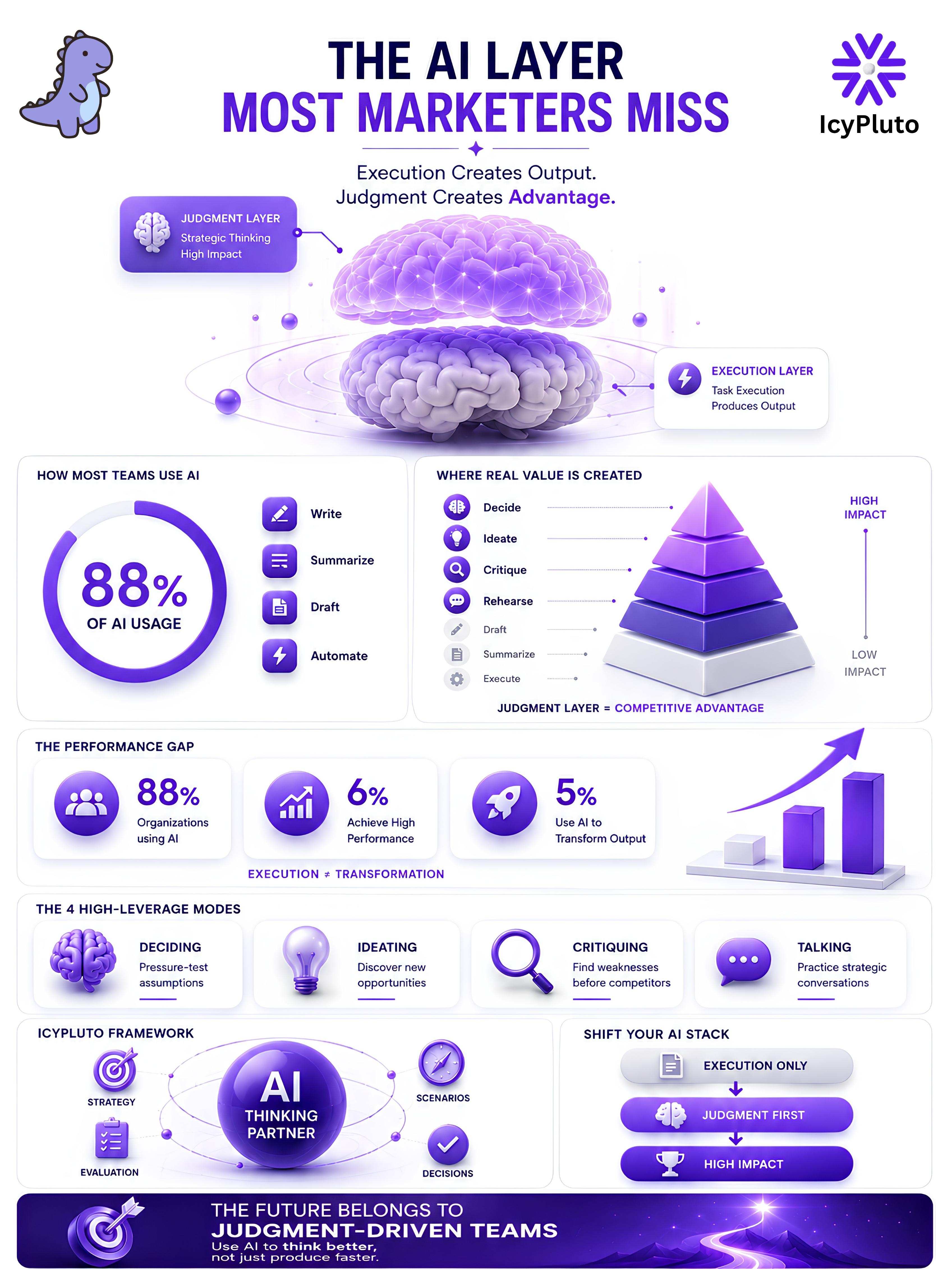
The Hidden Layer of AI Most Marketers Are Missing - The Real AI Advantage Isn’t Speed. It’s Judgment.
This blog explains the critical difference between using AI in the execution layer (drafting, summarizing, speeding up tasks) versus the judgment layer (strategic decision-making, ideation, critiquing, and scenario planning). It argues that the real competitive advantage in 2026 lies in shifting AI usage toward higher-value judgment activities, and provides practical guidance for marketers and SEO professionals to maximize AI’s strategic impact.
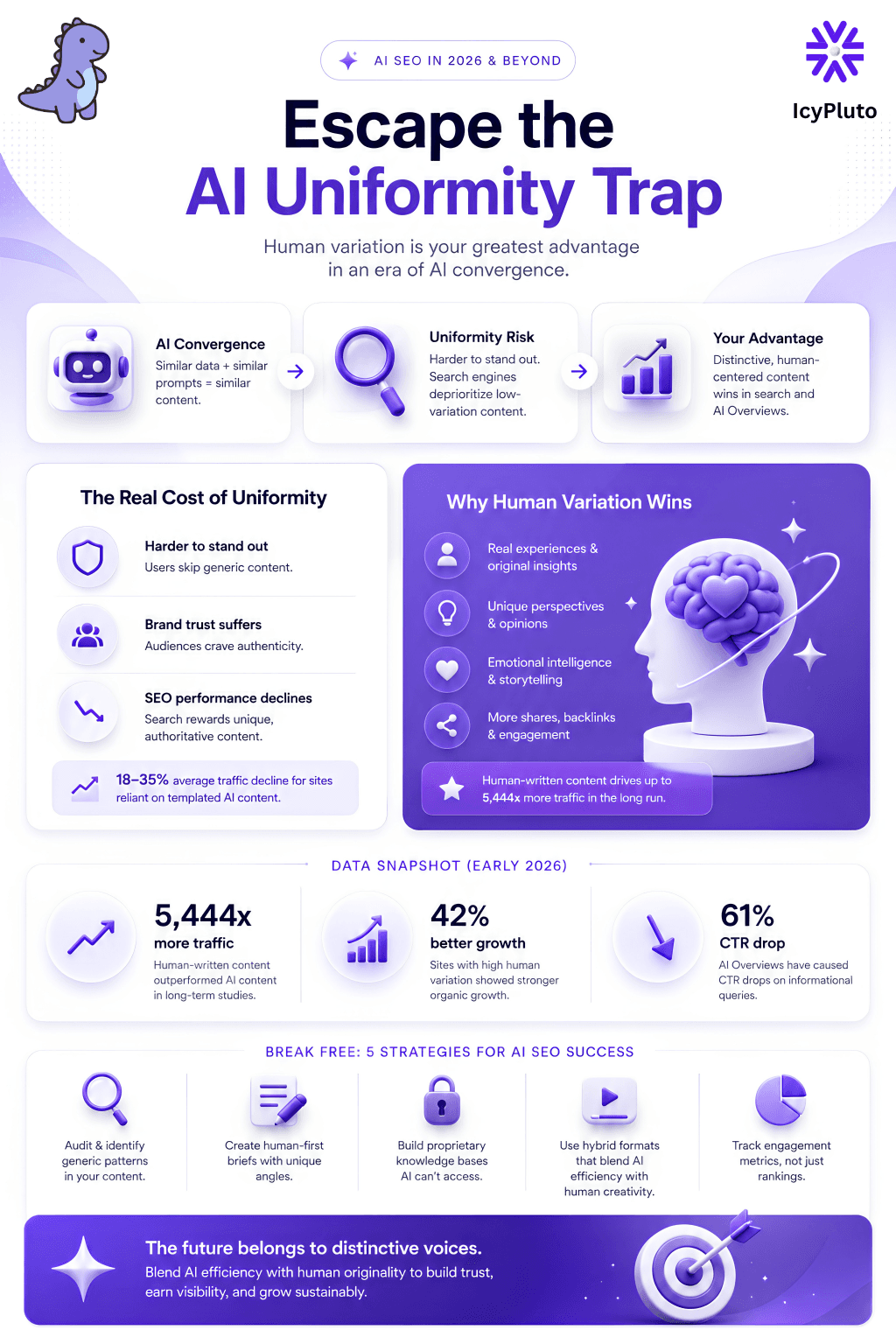
The AI Uniformity Trap: Why Your SEO Strategy Might Be Quietly Disappearing Into the Crowd
This blog explores the growing challenge of AI convergence in content creation and its impact on SEO. It explains how over-reliance on AI tools is leading to content uniformity across brands, creating the AI Uniformity Trap. The article discusses the risks to visibility and rankings, why human variation is becoming a key competitive advantage, and practical strategies for building a more distinctive and effective AI SEO approach in 2026.
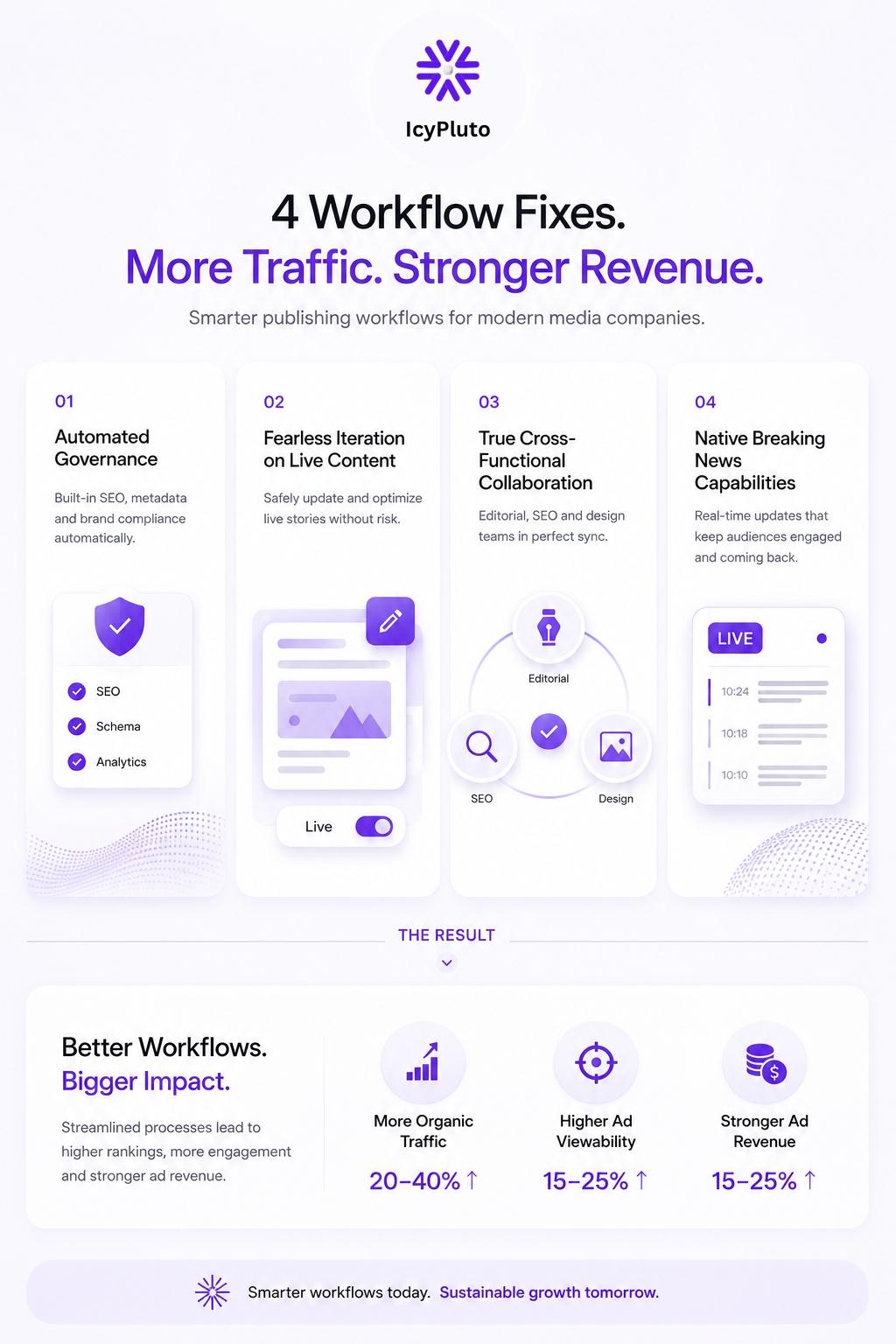
Why Better Publishing Workflows Can Dramatically Boost Both Organic Traffic and Ad Revenue
This blog explains how digital publishers can simultaneously increase organic search traffic and ad revenue by fixing inefficiencies in their publishing workflows. It highlights the hidden costs of fragmented legacy systems and outlines four key workflow improvements — automated governance, fearless live content iteration, cross-functional collaboration, and native breaking news capabilities — along with practical steps and strategic insights for modern media organizations.
Topic Spotlight
AI Visibility
OpenAI Just Changed the Game: Why ChatGPT Ads Are About to Become Your New Best Friend (or Worst Nightmare)
This blog post explores OpenAI's groundbreaking launch of conversion-focused advertising inside ChatGPT, marking a major shift from experimental brand awareness campaigns to full-scale performance marketing that competes directly with Google and Meta. The article breaks down how OpenAI is building advertising infrastructure including the OpenAI Pixel, Conversions API, and self-serve Ads Manager with CPC bidding ranging from $3 to $5, while targeting $2.5 billion in ad revenue for 2026 and $100 billion by 2030. With 900 million weekly active users already on ChatGPT and ad minimums dropping from $250,000 to $50,000, the platform is becoming accessible to small and mid-sized businesses focused on measurable outcomes like purchases, appointment bookings, and lead submissions. The post explains how conversion-focused ads differ from traditional CPM-based advertising, highlights early benchmarks showing 2-5 percent conversion rates and CTRs, and provides actionable guidance for marketing professionals on whether to test the channel now or wait for more maturity, while also addressing risks around measurement accuracy, brand safety, and regulatory challenges in the emerging conversational AI advertising landscape.
The Shift to AI 2.0: Why Most Marketers Are Missing the Real Opportunity
This blog explores the critical shift from AI 1.0 (focused on productivity and speed) to AI 2.0 (focused on measurable business outcomes and revenue growth) in marketing. It explains why many organizations are struggling to see real ROI from AI investments, introduces the powerful concept of Positionless Marketing, and offers practical strategies for marketing teams to successfully transition into this new era of high-impact AI usage.
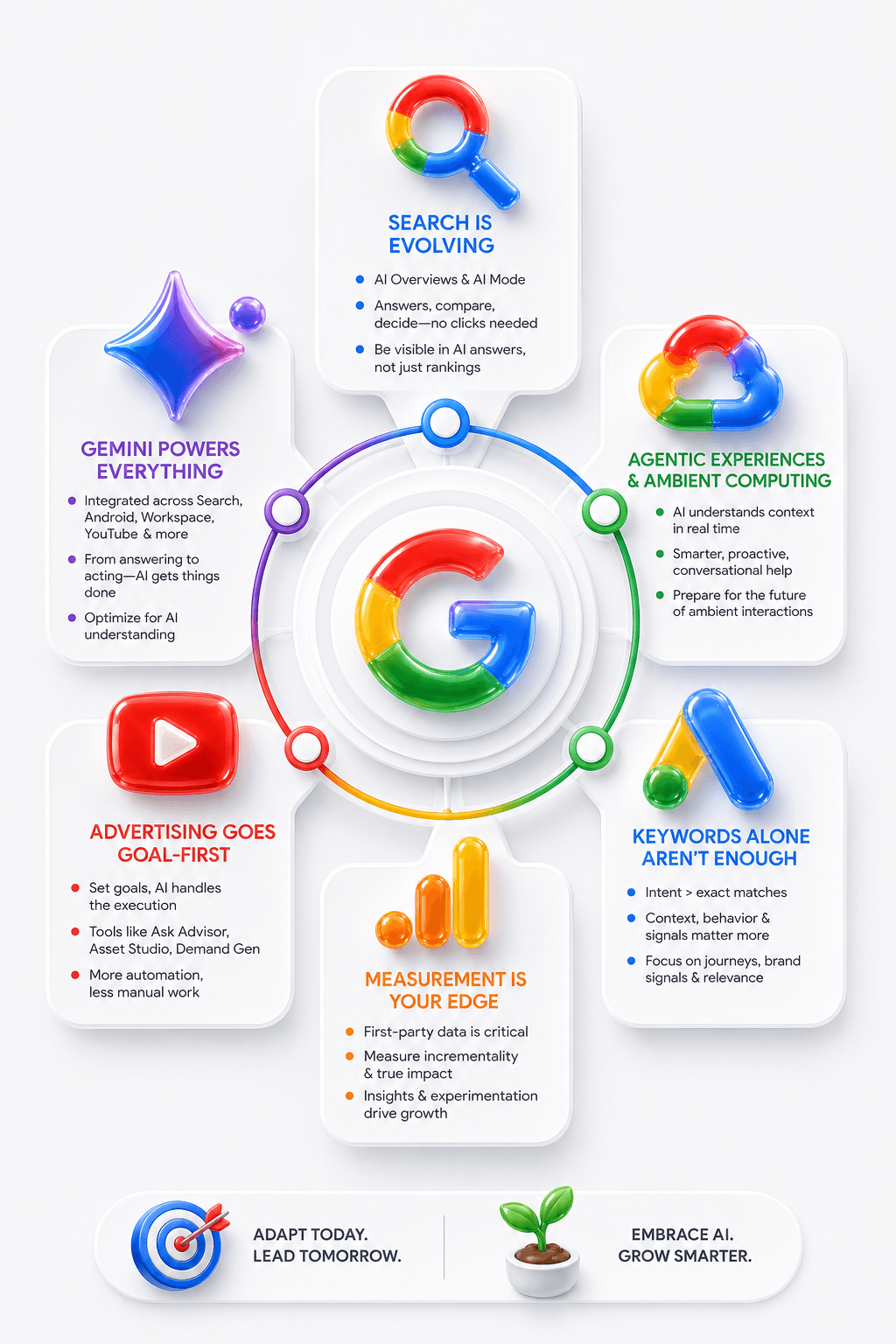
Why Google’s 2026 Announcements Should Make Every Marketer Rethink Their Strategy
This blog post analyzes Google’s major 2026 announcements from I/O and Marketing Live, exploring how AI is transforming search, advertising, shopping, and content discovery. It discusses the shift toward conversational AI experiences, the declining importance of traditional clicks, the rise of brand authority, and practical strategies for marketers and businesses to adapt successfully in this new AI-driven landscape.
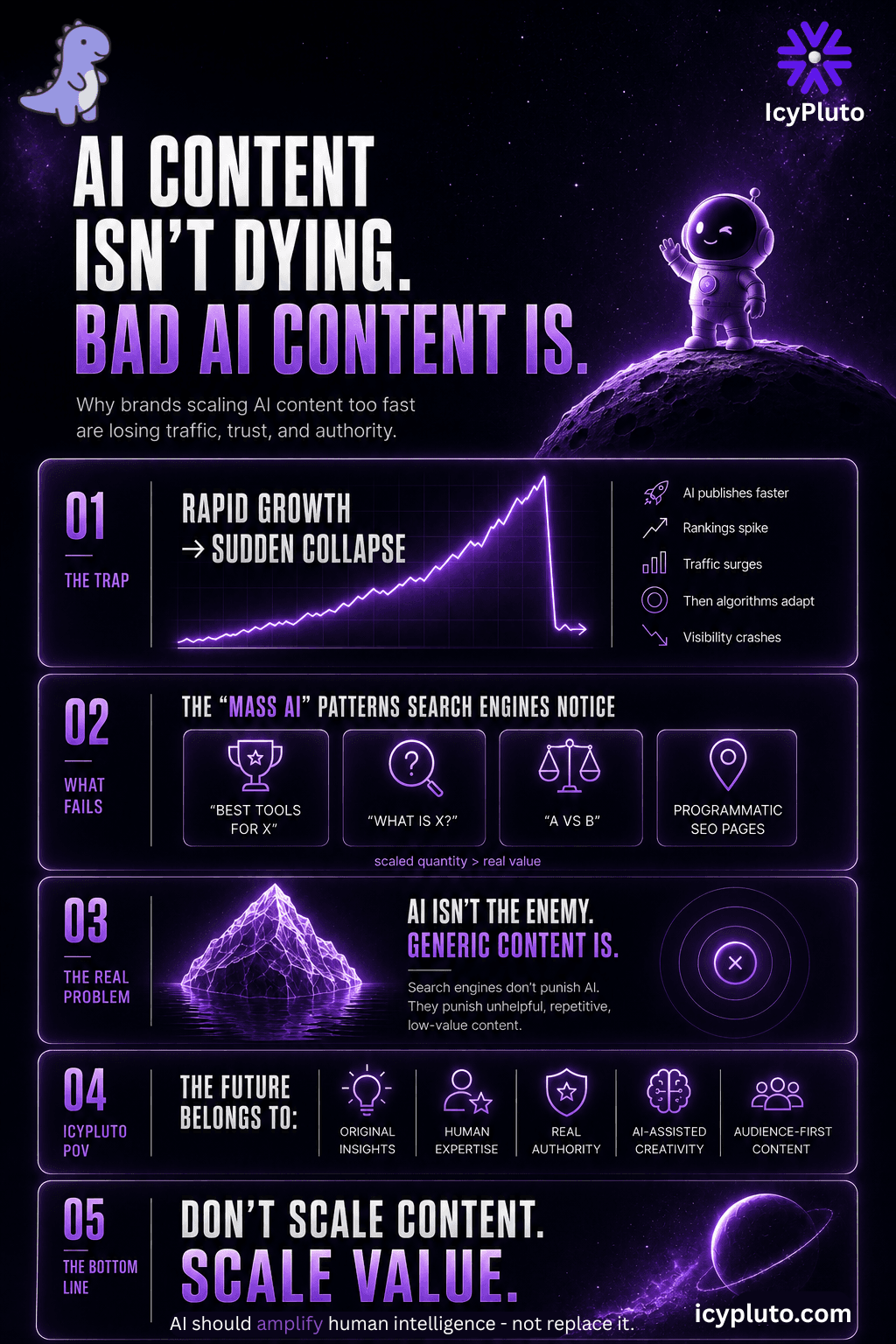
The Dangerous Allure of AI Content: Why So Many Strategies Work Brilliantly… Until They Suddenly Don’t
This blog explores the growing trend of AI-powered content strategies, highlighting how many brands experience rapid short-term gains in traffic and visibility, only to suffer sharp declines later. It examines the common risky patterns, real-world consequences, and offers practical guidance on using AI responsibly to build sustainable, high-quality content strategies that last.
Topic Spotlight
Generative Engine Optimization
The Hidden Divide Between SEO and AI Search: Why Your Best Content Might Be Invisible to ChatGPT, Perplexity, and Claude
This comprehensive blog post explores the SEO-GEO gap — the critical divide between traditional search engine optimization and generative engine optimization for AI-powered search engines. Based on real data from analyzing 10 websites and 150,000 indexed pages, it reveals that nearly half of top-performing organic pages receive zero AI search traffic from platforms like ChatGPT, Claude, Perplexity, and Microsoft Copilot. The article explains why traditional SEO content underperforms in AI search while original data, trends analysis posts, and interactive tools dominate AI citations, offering four actionable GEO tactics including using answer capsules for a 190% citation increase. It also features IcyPluto's unique perspective as the only agentic AI for marketing that tracks and implements GEO across 10+ AI models, explaining how brands can integrate both SEO and GEO for maximum visibility and win AI recommendations, not just search rankings.
The Hidden Layer of AI Most Marketers Are Missing - The Real AI Advantage Isn’t Speed. It’s Judgment.
This blog explains the critical difference between using AI in the execution layer (drafting, summarizing, speeding up tasks) versus the judgment layer (strategic decision-making, ideation, critiquing, and scenario planning). It argues that the real competitive advantage in 2026 lies in shifting AI usage toward higher-value judgment activities, and provides practical guidance for marketers and SEO professionals to maximize AI’s strategic impact.

Why Condé Nast's CEO Is Telling His Team to Plan for Zero Search Traffic – And What It Means for All of Us
This blog post discusses Condé Nast CEO Roger Lynch’s strategic directive to plan business operations assuming search engine traffic could drop to near zero. It explores the reasons behind declining search traffic, the impact on digital publishers, the “barbell effect” in media brands, the rise of subscription models, and practical advice for content creators and publishers to build more resilient, less search-dependent businesses.
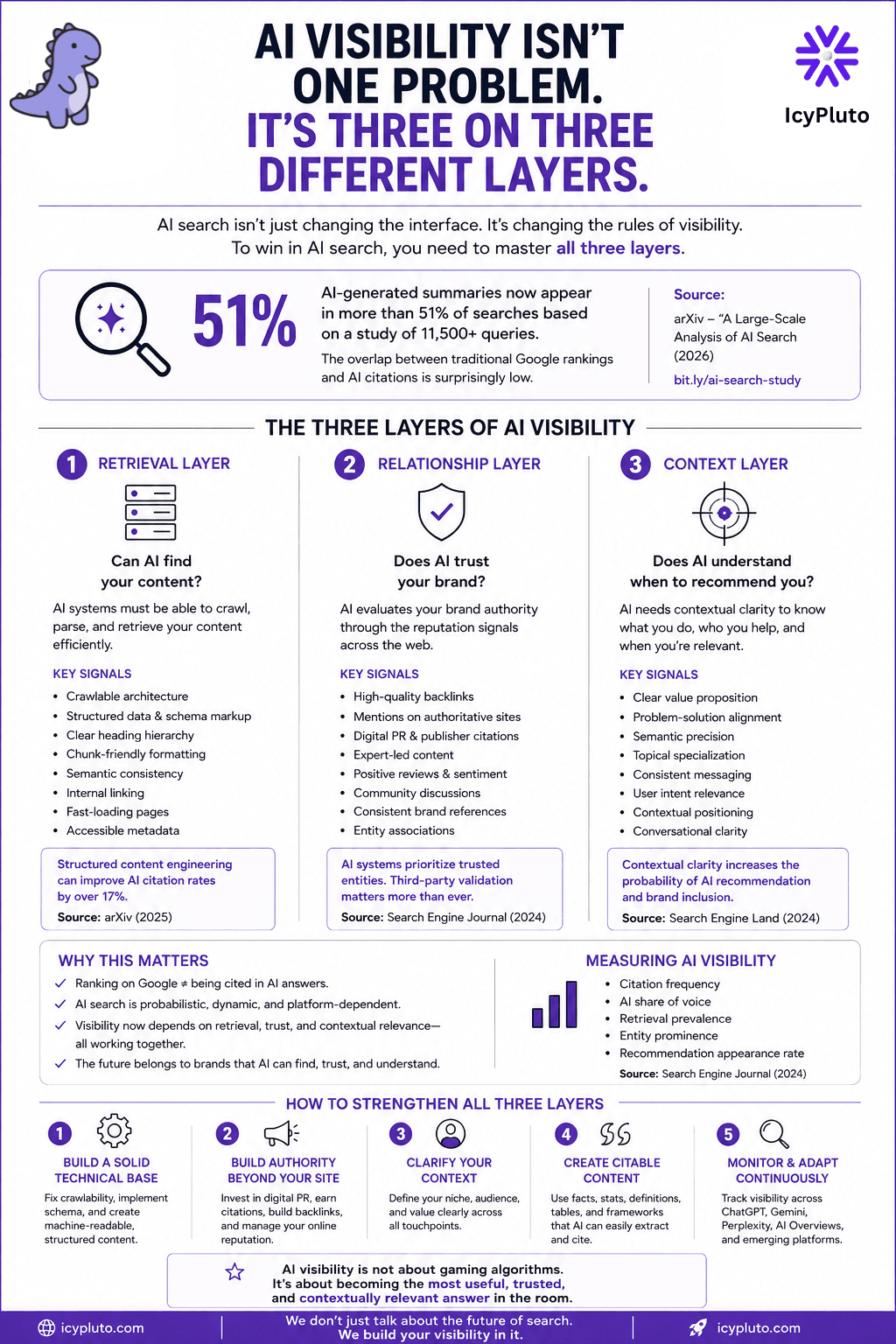
AI Visibility Isn’t One Problem: Why Brands Need A Three-Layer Strategy For AI Search Dominance
This article explores why AI visibility is no longer a single SEO challenge but a three-layer ecosystem involving retrieval, relationships, and context. It explains how AI-powered search engines and generative answer systems like ChatGPT, Google AI Overviews, Gemini, and Perplexity evaluate brands differently from traditional search engines. The blog highlights the growing importance of Generative Engine Optimization (GEO), semantic authority, structured content, entity recognition, contextual relevance, and machine-readable architecture. It also discusses how brands must optimize not just for rankings, but for being understood, trusted, and recommended by AI systems. The article provides actionable insights into how businesses can strengthen AI search visibility through technical SEO, digital PR, contextual positioning, and citation-friendly content strategies.
Topic Spotlight
Search Engine Optimization
Topic Spotlight
Brand Strategy
Newsletter
Stay ahead of AI search.
Weekly insights on GEO, AI visibility, and brand strategy, distilled for founders and growth teams.
Join 500+ brands that track, analyze, and optimize their presence across every major AI model.
No credit card required · 14-day free trial