
70% of B2B Buyers Ask AI Before They Ever Visit Your Website
Are You Even in the Answer?
If you’re leading marketing at a SaaS or B2B tech company, here’s a reality check:
Your next customer is probably asking ChatGPT, Gemini, or Perplexity about your category right now.
Not Google.
Not G2.
Not your website.
AI.
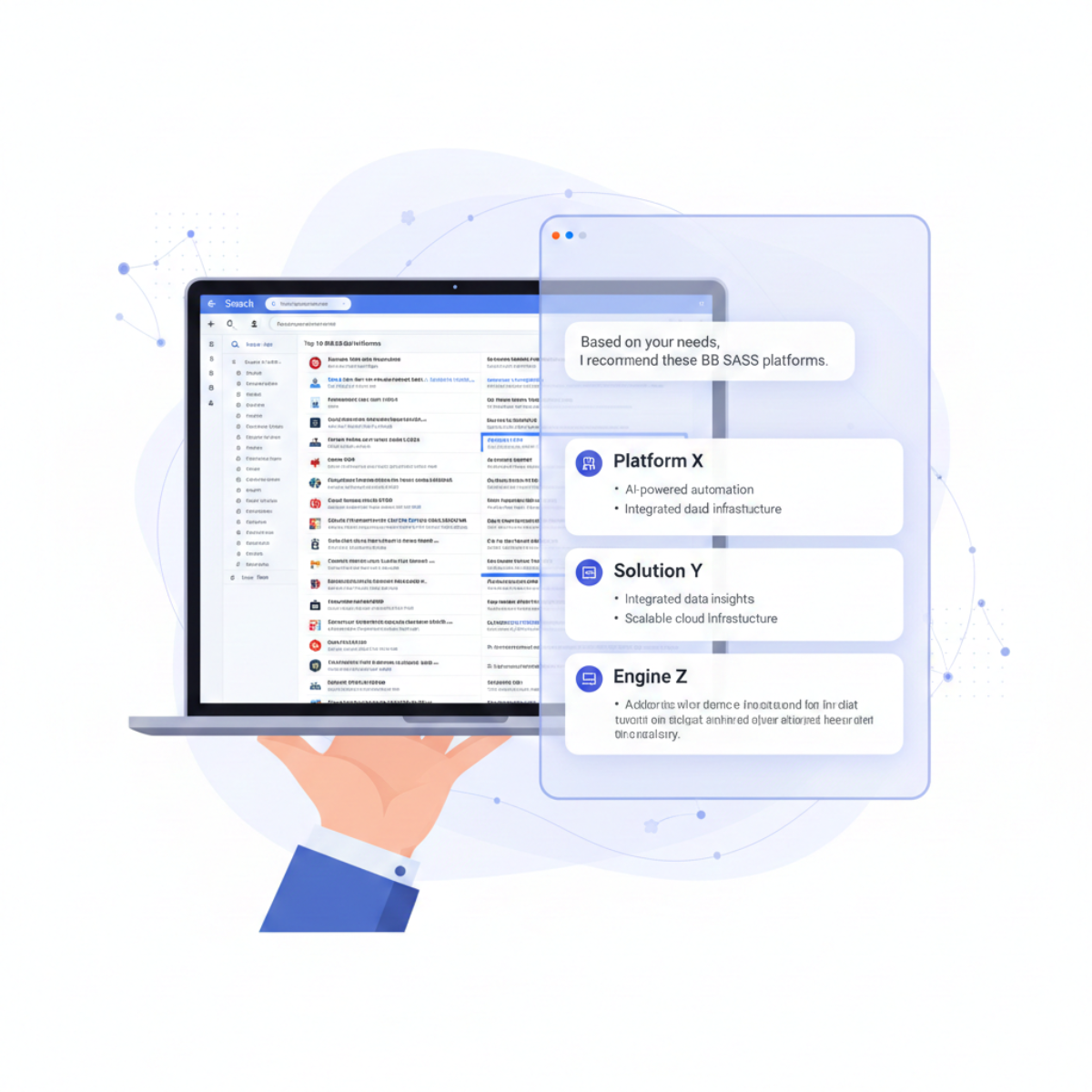
And those platforms don’t show ten options.
They recommend three to five.
That’s the shift from SEO (Search Engine Optimisation) to GEO (Generative Engine Optimisation), and it’s already reshaping B2B pipeline dynamics.
The SEO Era vs The GEO Era
For the past decade, SaaS growth was predictable:
Rank for high-intent keywords
Capture organic traffic
Convert with landing pages
Retarget with ads
In that world:
Position #1 could drive 25–35% of clicks.
The top 3 rankings captured the majority of traffic.
But in AI-driven discovery:
There is no page 1.
There are no 10 blue links.
There is only one answer.
If AI doesn’t recommend your SaaS product, your visibility for that query is effectively 0%.
That’s not a ranking drop.
That’s elimination from consideration.
The Quantified Impact of the GEO Shift
Let’s talk numbers.
1️⃣ Shortlist Compression

Traditional research behaviour:
Buyers evaluated 5-10 vendors.
AI-driven behaviour:
Buyers are often shown 3-5 recommendations.
That’s up to a 50% reduction in vendor visibility.
If you’re not in that compressed shortlist, you don’t enter the sales funnel.
2️⃣ Zero-Click Expansion
Informational queries are increasingly being answered directly within AI interfaces.
That means:
Fewer top-of-funnel clicks
Lower blog traffic dependency
Reduced organic CTR for generic queries
But here’s the upside:
AI queries are often more specific and higher intent.
3️⃣ Higher Intent Density
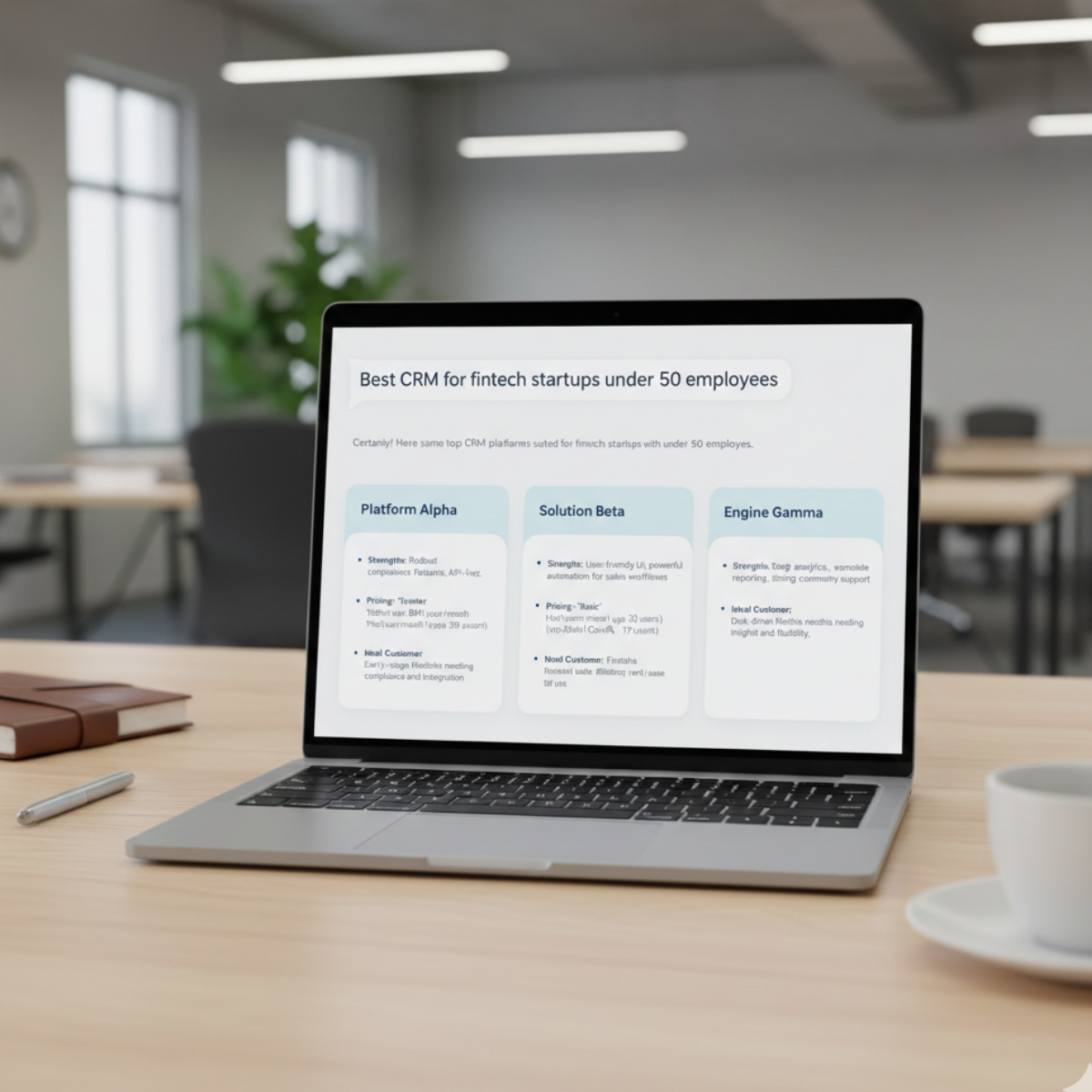
Compare these:
SEO-era query:
“CRM software”
GEO-era query:
“Best CRM for fintech startups under 50 employees”
The second query signals:
Industry
Company size
Budget sensitivity
Immediate buying intent
If your SaaS brand appears in that AI response, the conversion probability is significantly higher than broad organic traffic.
Less volume.
More precision.
Use Case 1: AI SDR SaaS
A VP Sales asks:
“Best AI SDR tools for outbound prospecting in B2B SaaS.”
AI generates:
4 tool recommendations
Strengths and weaknesses
Ideal customer profiles
Pricing context
If your competitor is described as:
“Best for scaling mid-market outbound teams with automation-first workflows”
And you’re not mentioned, your paid ads now compete against AI-driven trust.
That affects:
Demo volume
Cost per acquisition
Sales cycle length
Use Case 2: DevOps / Infrastructure SaaS
A CTO searches:
“Best monitoring tools for scaling microservices architecture.”
AI prioritises:
Technically authoritative brands
Frequently cited platforms
Enterprise-ready positioning
If your SaaS brand lacks strong, structured authority content, AI may not associate you with high-scale infrastructure, even if your product is capable.
That directly impacts:
Enterprise pipeline
High-ACV deal flow
Technical buyer perception
What GEO Requires That SEO Didn’t
SEO optimised for:
Keywords
Backlinks
Technical site health
GEO optimises for:
AI share of voice
Brand citation frequency
Conversational intent alignment
Competitive mention ratios
AI perception framing
In other words:
Not just “Can we rank?”
But “Will AI recommend us?”
How to Win in the GEO Era (Practically)
1️⃣ Audit AI Visibility
Check:
Are you appearing in “best tools for…” prompts?
How does AI describe your brand?
Which competitors dominate AI comparisons?
If you don’t measure AI visibility, you can’t improve it.
2️⃣ Align Content to Commercial Intent
Structure content around:
Best tools queries
Alternatives queries
Comparison prompts
Industry-specific use cases
AI responds better to clear positioning than vague thought leadership.
3️⃣ Strengthen Authority Signals
AI models synthesise patterns across:
Brand mentions
Consistent messaging
Structured comparisons
Domain-level expertise
Clarity and consistency increase recommendation probability.
The Strategic Reality for B2B & SaaS Leaders

SEO still matters.
But SEO drives traffic.
GEO drives recommendations.
And in B2B SaaS, being recommended early can influence 30–50% of the consideration stage before a buyer ever lands on your website.
The real question isn’t:
“Are we ranking?”
It’s:
When 70% of buyers ask AI about your category…
Are you in the answer, or watching your competitor close the deal?